Pickleball vs Tennis: The Key Differences Explained
Pickleball and tennis share a lot. Both use a net, both have singles and doubles, and many pickleball courts are painted right on top of tennis courts. But play a few games of each and they feel very different. Here is a side-by-side look at how the two sports compare.
Court size
The biggest difference is space.
-
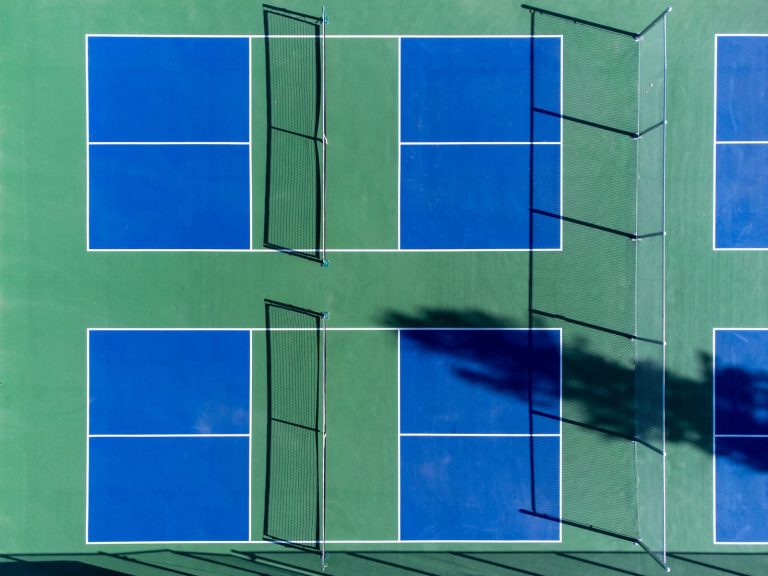
Pickleball court: 20 feet wide and 44 feet long, the same size for singles and doubles.
-
Tennis court: 78 feet long, 27 feet wide for singles and 36 feet wide for doubles.
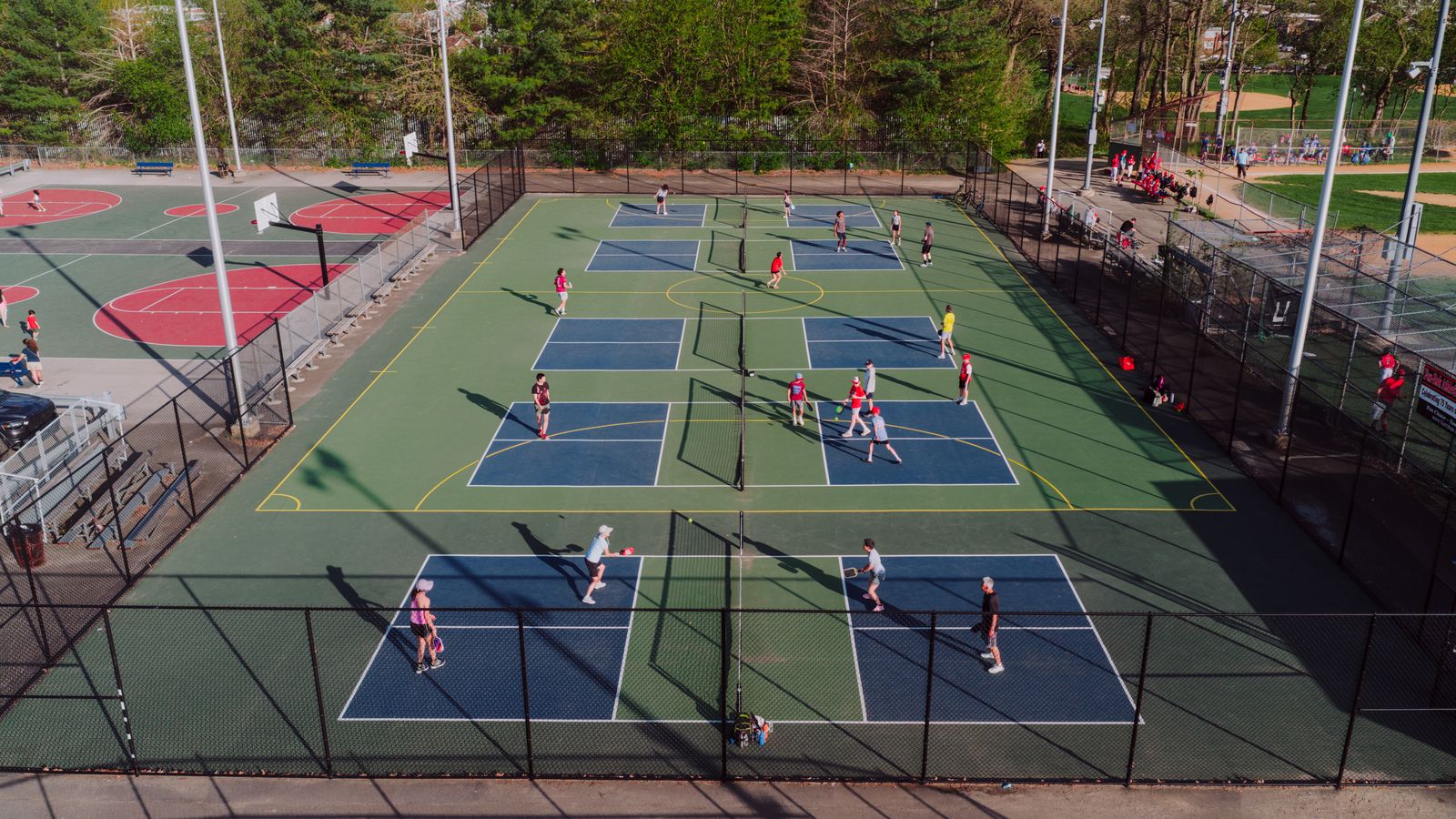
You can usually fit four pickleball courts into the footprint of one tennis court. That is a big reason pickleball spread so quickly: parks and clubs can host many more players in the same space.
The nets are also different. A pickleball net is 36 inches high at the sidelines and 34 inches at the center. A tennis net is 42 inches at the posts and 36 inches at the center.
Equipment
Paddle vs racket
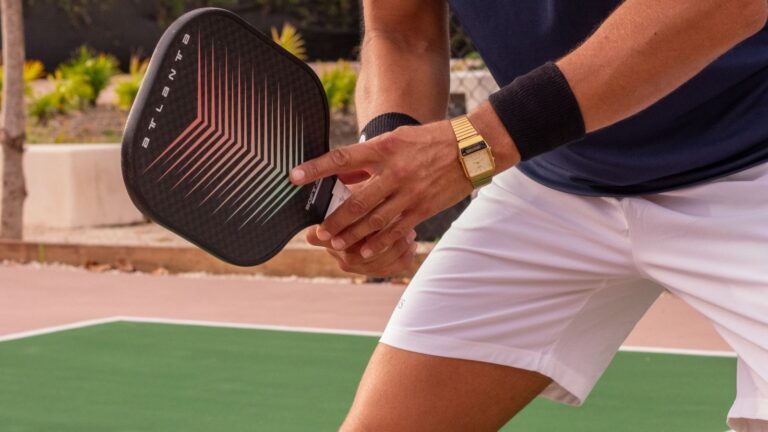
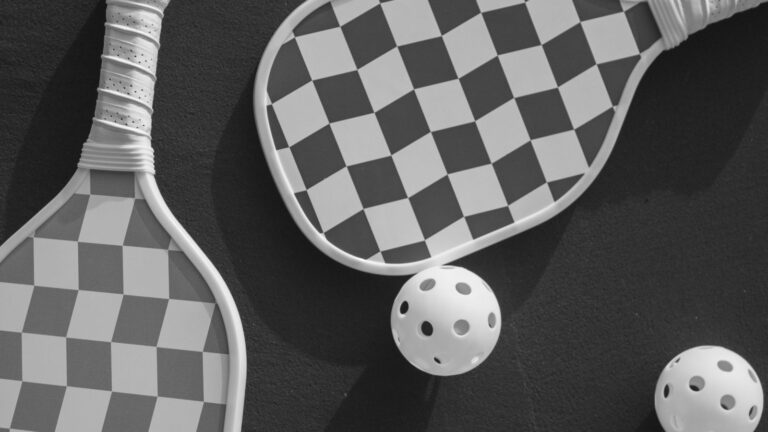
Pickleball uses a solid paddle with no strings. Paddles are much shorter than tennis rackets, usually around 16 inches long, and many weigh about 7 to 8.5 ounces. Tennis rackets are around 27 inches long, are strung and are generally heavier. The shorter paddle is easier to control, especially for new players.
Ball
A pickleball is a hollow plastic ball with holes, similar to a wiffle ball. It is light and does not bounce very high, and it slows down quickly through the air. A tennis ball is pressurized rubber covered in felt. It is heavier, faster and bounces much higher.
The slower pickleball gives you more time to react, which makes rallies easier from the very first day.
Serving
The serve is a major weapon in tennis and a much smaller one in pickleball.
-
Tennis: most players serve overhand, often at high speed. You get two attempts, a first and a second serve.
-
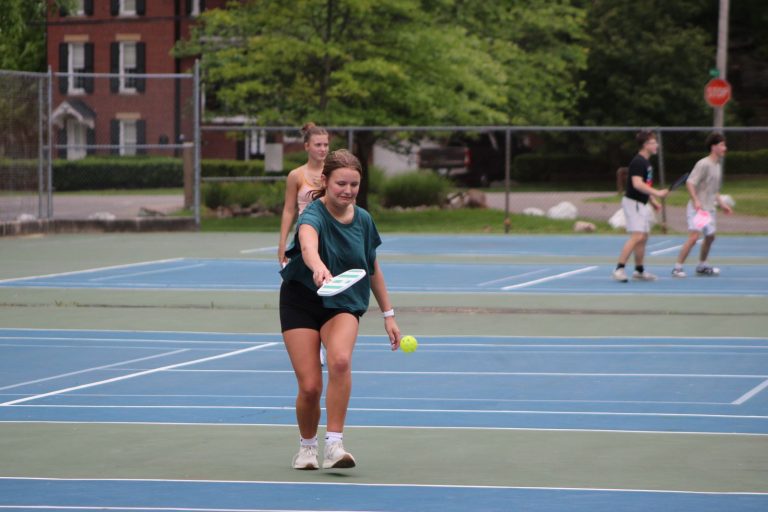
Pickleball: the serve must be underhand, with contact below the waist, or you can use a drop serve, letting the ball bounce first. You get only one attempt.
Pickleball also has the two-bounce rule: the serve must bounce before the receiver hits it, and the return must bounce before the serving team hits it. After that, players can volley. Tennis has no such rule; a player can rush the net right after serving. For the details, see our guide to pickleball serve rules.
Scoring
Tennis scoring uses points (love, 15, 30, 40, game), games and sets. A set is usually first to six games, winning by two, with a tiebreak at six games all. Matches are best of three or five sets and can last hours.
Pickleball is simpler on paper. A typical game is played to 11 points, and you must win by two. In traditional scoring, only the serving team can score a point. Doubles adds a server number to the score call, which confuses many beginners at first. Some leagues and events use rally scoring, where a point is scored on every rally. A pickleball game usually takes 15 to 25 minutes. Our guide to pickleball scoring walks through examples.
The kitchen
Pickleball has a rule tennis does not: the non-volley zone, or kitchen. This 7-foot area on each side of the net is off limits for volleys. You cannot hit the ball out of the air while touching the zone or its line.
In tennis, standing close to the net and volleying is a strong, legal tactic. In pickleball, the kitchen prevents players from crowding the net and smashing everything, which leads to the soft “dink” game that defines high-level pickleball play.
Style of play
Tennis rewards power, topspin and deep groundstrokes from the baseline. Points are often won with big serves and hard-hit winners.
Pickleball rewards placement, patience and quick hands. In doubles, much of the action happens with all four players near the kitchen line, trading soft shots until someone hits a ball high enough to attack. Doubles is also far more popular in pickleball than singles, while tennis has a strong singles culture.
Physical demand
Tennis is generally more demanding. The larger court means more running, the heavier racket and faster ball put more stress on the shoulder and elbow, and long matches test endurance.
Pickleball is easier on the body for most people, but it is not a gentle stroll. Doubles involves short bursts, quick lateral steps and bending low, and competitive singles is a real workout. Injuries do happen, often from falls while backpedaling, so warm up and wear court shoes in either sport.
Cost
Both sports can be cheap or expensive, depending on how far you take them.
-
Pickleball: a decent beginner paddle often costs $50 to $100, and balls are inexpensive. Many public parks offer free courts and open play sessions.
-
Tennis: a beginner racket costs a similar amount, but strings wear out and need replacing, balls lose pressure and need replacing often, and lessons or club fees can add up.
For a casual player, pickleball usually has the lower ongoing cost. Our guide to choosing a pickleball paddle can help you pick a first one.
Learning curve
This is where pickleball shines for beginners. Most people can learn the basics and play real games within an hour or two. The underhand serve, small court and slow ball all help.
Tennis takes longer to enjoy. Beginners often spend weeks or months learning to rally consistently and to serve overhand without double faulting.
That said, pickleball is not “easy” at higher levels. The gap between a casual player and a skilled one is large, and shots like the third shot drop and dink take a long time to master.
Which sport suits you?
Pickleball may suit you if:
-
You want to play competitive games quickly without months of lessons.
-
You prefer a social game, usually doubles, with lots of rotation and new partners.
-
You want a lower-impact option, or you are returning to sport after a break.
-
You have limited court time and want short games.
Tennis may suit you if:
-
You enjoy power, running and longer, more physical rallies.
-
You like singles and a one-on-one challenge.
-
You want a sport with deep coaching resources and a long competitive pathway.
Many people play both. Tennis players often pick up pickleball quickly, though they must unlearn the urge to swing hard.
FAQ
Is pickleball easier than tennis?
It is easier to start. The smaller court, slower ball and underhand serve let beginners rally almost right away. At an advanced level, both sports are very demanding in different ways.
Can you play pickleball on a tennis court?
Yes. Many courts have pickleball lines painted alongside tennis lines, and portable pickleball nets are common. A tennis net is too high in the middle for official pickleball, so a separate net is best.
Does tennis experience help in pickleball?
Yes, especially footwork, hand-eye coordination and volleying. The main adjustments are playing softer, respecting the kitchen and using the underhand serve.
Quick recap
-
A pickleball court is 20 by 44 feet; about four fit on one tennis court.
-
Pickleball uses a solid paddle and a plastic ball with holes, which slows the game down.
-
The pickleball serve is underhand with one attempt; tennis allows two, usually overhand.
-
Pickleball games go to 11, win by two; tennis uses games and sets.
-
The kitchen rule makes pickleball a game of control rather than power.
-
Pickleball is quicker to learn and usually cheaper; tennis is more physically demanding.