How to Clean Grout Safely (and Keep It Clean Longer)
Tile is easy to wipe clean. The grout between the tiles is a different story. Most grout is cement-based and porous, so it soaks up dirt, soap scum, cooking grease and moisture. Over time white grout turns gray, and shower grout can develop dark mildew spots. The good news is that gentle methods work well, as long as you match the cleaner to the surface.
First, know what you are cleaning
Before you grab any cleaner, take a minute to answer two questions.
What is the tile? Ceramic and porcelain tiles tolerate most household cleaners. Natural stone such as marble, travertine, limestone and onyx is sensitive to acids, and even granite and slate are best cleaned with pH-neutral products. Acidic cleaners like vinegar or lemon juice can etch the surface and leave dull marks that do not wipe away.
What is the grout? Standard cement grout is porous and is often sealed. Epoxy grout, common in newer showers and kitchens, is nonporous and stain resistant. Unsealed cement grout absorbs whatever you put on it, including cleaners, so it needs gentle products and a good rinse.
If you are not sure, assume the more delicate option and use a pH-neutral approach.
What you need
-
A stiff nylon grout brush or an old toothbrush (never a wire brush, which can scratch tile and gouge grout)
-
Baking soda
-
Oxygen bleach powder (sodium percarbonate)
-
Warm water and a bucket
-
A spray bottle
-
Microfiber cloths
-
Rubber gloves
-
Optional: a handheld steam cleaner
Method 1: Baking soda paste for light grime
This is the gentlest option and a good place to start.
-
Mix baking soda with a little water until it forms a thick paste.
-
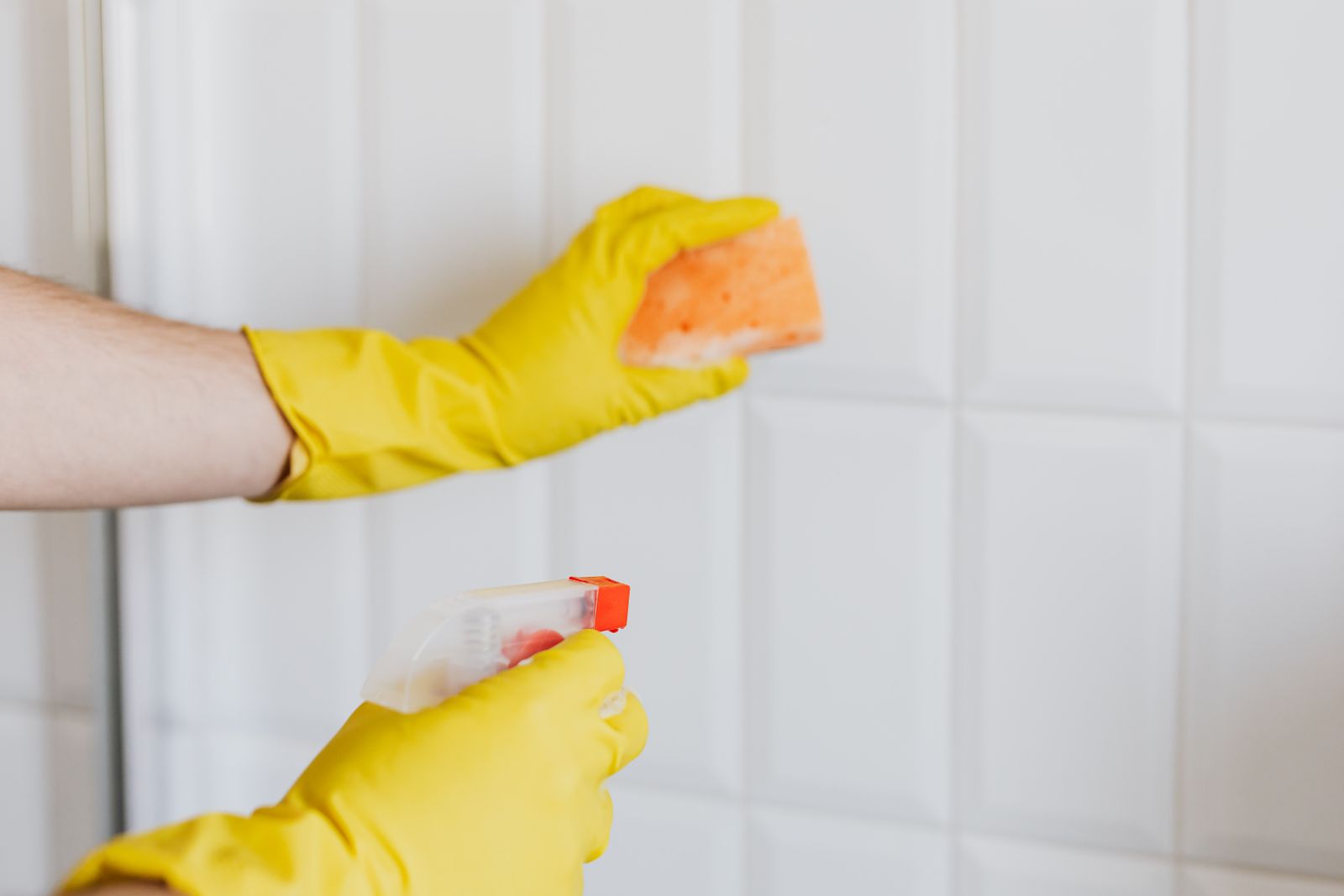
Spread the paste along the grout lines with your fingers (gloved) or the brush.
-
Spritz it lightly with plain water and let it sit 5 to 10 minutes.
-
Scrub along the grout line in short strokes.
-
Rinse with clean water and wipe dry with a cloth.
Baking soda is a mild abrasive. It lifts surface dirt and soap film well, but it will not remove deep-set stains or mildew on its own.
Method 2: Oxygen bleach for deeper stains
Oxygen bleach is a powder that releases hydrogen peroxide when dissolved in water. It brightens grout and helps break down organic stains without the harsh fumes of chlorine bleach, and it is generally safe for colored grout. Still, test it first.
-
Dissolve the powder in warm water according to the package directions.
-
Test it on a small, hidden grout line and let it dry to check for color change.
-
Apply the solution to the grout with a brush or cloth.
-
Let it sit 10 to 15 minutes, keeping the grout wet.
-
Scrub, then rinse thoroughly with clean water.
Mix oxygen bleach fresh each time. It loses strength after a few hours in solution, and you should never store it in a closed container once mixed, because it releases gas.
Method 3: Steam for a chemical-free clean
A handheld steam cleaner with a small nozzle or brush attachment uses heat to loosen dirt and soap scum. It is a good choice for people who want to avoid chemicals.
-
Work slowly along one grout line at a time and wipe away loosened dirt as you go.
-
Do not use steam on unsealed natural stone or on grout that is already cracked or crumbling, since heat and moisture can make damage worse.
-
Some tile and grout makers advise against steam, so check their care guidance if you have it.
-
Keep hands and face away from the nozzle. Steam burns quickly.
When to avoid vinegar
Vinegar shows up in many cleaning tips, but it is a poor fit for grout in two situations.
-
Natural stone. Vinegar is acidic and can etch marble, travertine and limestone, leaving permanent dull spots. Use a pH-neutral stone cleaner instead.
-
Unsealed or aging cement grout. Repeated acid exposure can slowly wear away the surface of cement grout, making it rougher and more porous, which means it gets dirty faster.
On sealed grout with ceramic or porcelain tile, an occasional diluted vinegar wipe is generally fine. Just do not make it your daily cleaner.
Mildew and stubborn stains
Dark spots in a shower corner are usually mildew. Oxygen bleach often handles them. If it does not, a diluted chlorine bleach product made for bathrooms can work on white grout, but treat it with care:
-
Never mix chlorine bleach with ammonia, vinegar or other acids, or with other cleaners. The combinations release toxic gases.
-
Open a window and run the exhaust fan.
-
Wear gloves and test on a hidden spot, since bleach can lighten colored grout.
-
Rinse well and let the area air out before using it again.
If mildew keeps returning or the grout feels soft and crumbly, it may be time to have it repaired or regrouted rather than scrubbed again.
Sealing grout after cleaning
Sealing is what keeps cement grout clean longer. A penetrating sealer fills the pores so spills and moisture sit on the surface instead of soaking in.
-
Clean the grout thoroughly and let it dry completely, ideally 24 to 48 hours in a well-ventilated room.
-
Apply the sealer to the grout lines with a small brush or applicator bottle.
-
Wipe any sealer off the tile surface before it dries, unless the product says it is safe on your tile.
-
Let it cure for the time listed on the label before getting it wet.
New grout must cure fully before sealing, often for several days, so follow the grout manufacturer’s timing. Epoxy grout usually does not need sealing at all. To test whether existing grout is sealed, drip a little water on it: if it darkens quickly, the water is soaking in and the grout needs a fresh coat. Many households reseal every one to two years, more often in busy showers.
How to keep grout clean
-
Squeegee or towel-dry shower walls after use.
-
Run the bathroom fan during showers and for 20 to 30 minutes after.
-
Wipe kitchen backsplash spills before they dry.
-
Sweep or vacuum tile floors often so grit does not grind into the grout.
-
Use a pH-neutral cleaner for routine mopping.
-
Give the grout a quick scrub with the baking soda paste every few weeks.
FAQ
What is the best homemade grout cleaner?
For most homes, a baking soda paste for routine cleaning and oxygen bleach for tougher stains. Both are inexpensive, effective and gentle on ceramic and porcelain tile.
Can I use bleach on colored grout?
Chlorine bleach can lighten or blotch colored grout. Use oxygen bleach instead, and test it on a hidden spot first.
How do I know if my grout is sealed?
Drip a few drops of water on a grout line. If the water beads up, it is sealed. If it darkens and soaks in within a minute or two, it needs sealing.
Is it worth regrouting instead of cleaning?
If grout is cracked, missing, crumbling or permanently stained after a proper cleaning, regrouting is often the better long-term fix.
Quick recap
-
Identify your tile and grout type before choosing a cleaner.
-
Start with baking soda paste, then try oxygen bleach or steam.
-
Skip vinegar on natural stone and unsealed grout.
-
Never mix bleach with ammonia or vinegar, ventilate and test first.
-
Seal cement grout once it is clean and dry, and reseal every year or two.
-
Dry the shower and run the fan to prevent mildew.