10 Common Pickleball Mistakes Beginners Make (and How to Fix Them)
In beginner pickleball, most points are not won by brilliant shots. They are lost by small, repeated mistakes. The upside is that these mistakes are easy to fix once you know what to look for. Work on one or two at a time and you will see a difference within a few games.
1. Rushing forward after the serve
The mistake: serving and running toward the net.
The fix: remember the two-bounce rule. The return must bounce before your team can hit it, so stay back near the baseline until it lands. Then move forward with control.
A good habit: after you serve, take one step back behind the baseline. Most returns land deep, and it is much easier to move forward to a short ball than to scramble backward for a deep one.
2. Hitting every ball as hard as possible
The mistake: treating every shot like a tennis drive.
The fix: pickleball rewards placement and patience. A soft shot that lands in the kitchen forces your opponent to hit up, which gives you the next attackable ball.
Hard shots are not wrong, but they need a target. A drive at an opponent’s feet from mid-court can work. A drive at an opponent waiting at the kitchen line with their paddle up usually comes straight back faster. Our guides to dinking and the third shot drop explain the soft shots that set up your attacks.
3. Standing flat-footed
The mistake: standing upright with straight legs and the paddle hanging low.
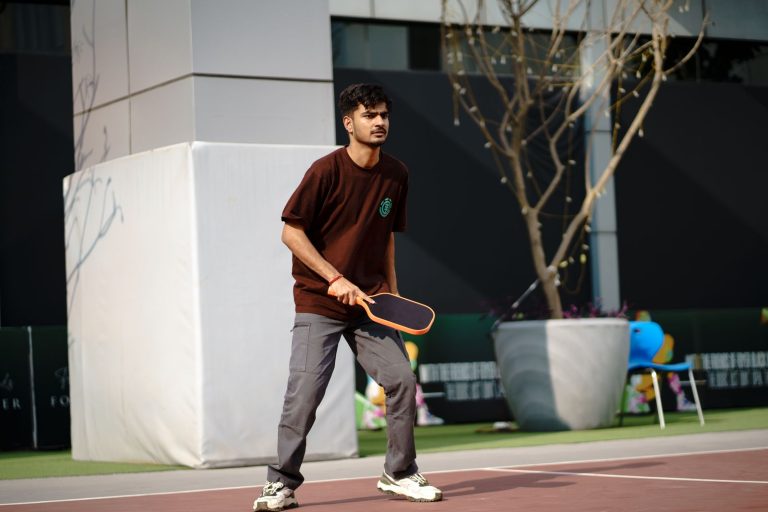
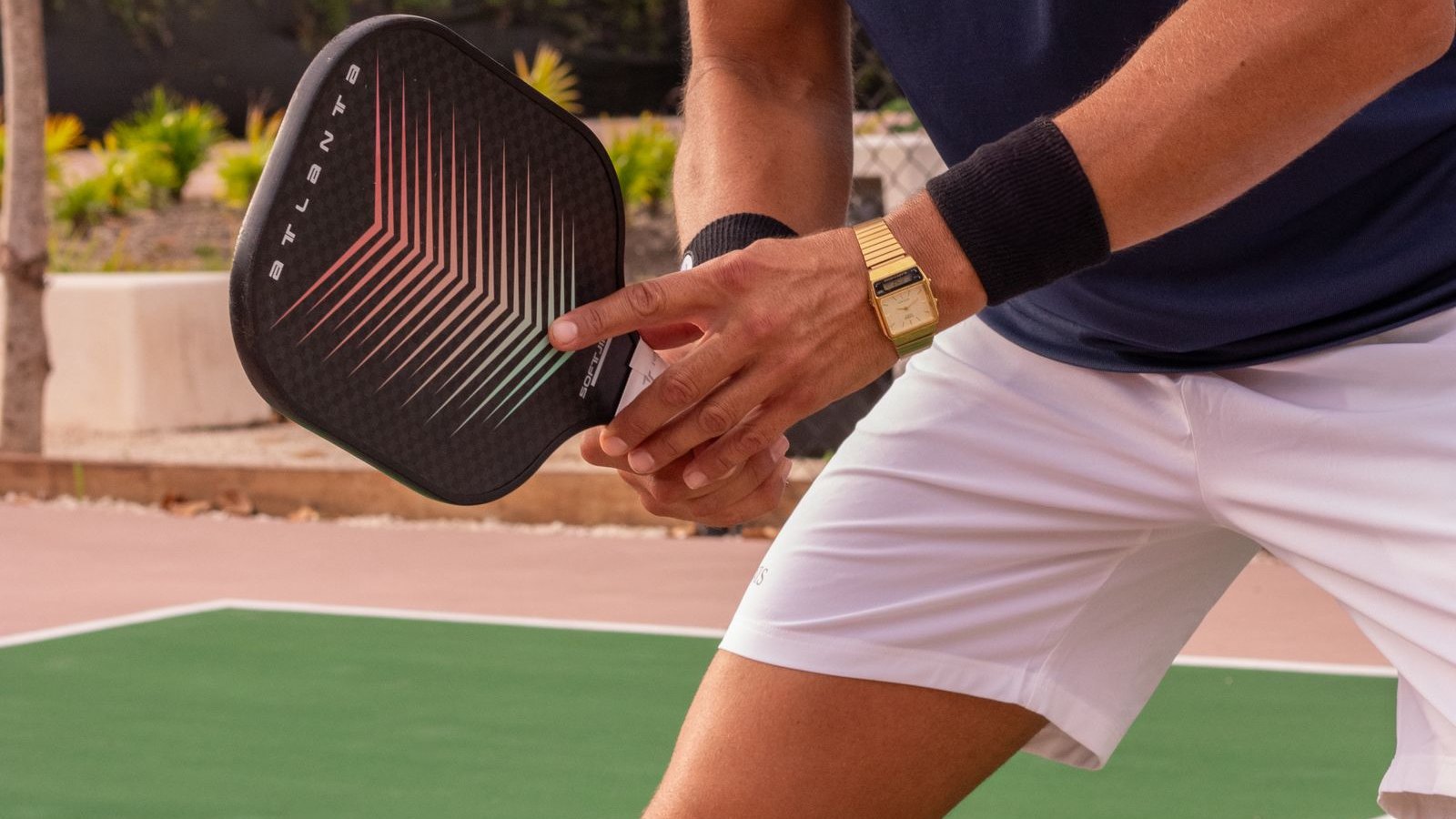
The fix: use a ready position. Knees slightly bent, weight on the balls of your feet and the paddle up in front of your chest. You will react faster to every ball.
Add a small hop, called a split step, just as your opponent hits the ball. Landing on both feet at that moment lets you push off in any direction.
4. Staying at the baseline
The mistake: returning the serve and then staying at the back of the court.
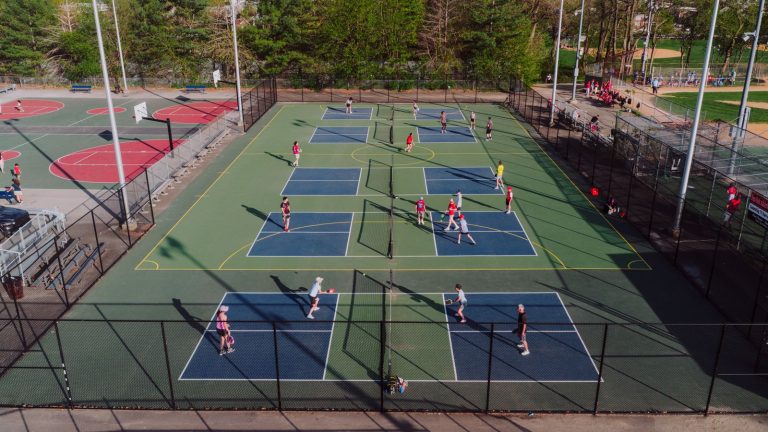
The fix: after you return the serve, move forward to the kitchen line. The team that controls the net usually controls the point.
Hitting a deep, high return buys you the time to get there. A low, fast return that lands short comes back before you have taken three steps.
5. Volleying from the kitchen
The mistake: stepping into the kitchen to hit a ball out of the air, or falling in after a volley.
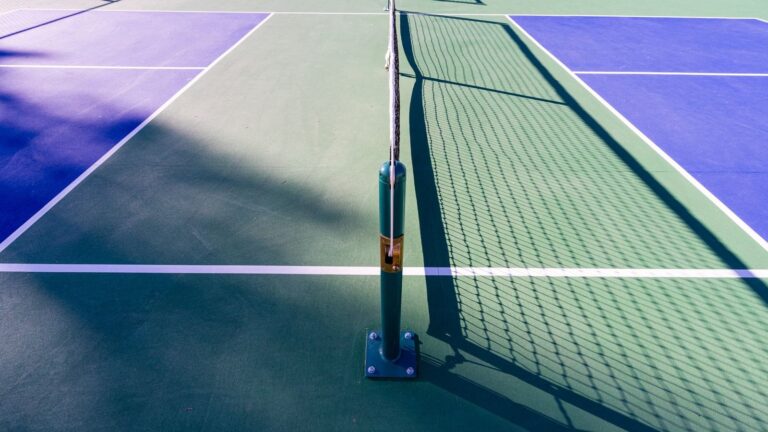
The fix: stand just behind the kitchen line and finish every volley balanced. Only step in for balls that have bounced. If you stepped in to play a bounced ball, get both feet back out before the next volley.
6. Watching your opponent instead of the ball
The mistake: looking up to see where your shot is going before you have hit it.
The fix: keep your eyes on the ball until it leaves your paddle. Your shots will be cleaner and more consistent.
Try keeping your head still for a moment after contact, as if you were watching the spot where you hit the ball. It feels strange at first, but mishits drop quickly.
7. Big backswings at the net
The mistake: swinging the paddle far back when the ball is coming fast at the net.
The fix: keep the paddle in front of you and use short, compact punches or blocks. There is no time for a big swing in fast exchanges.
A simple check: you should be able to see your paddle in your peripheral vision the whole time you are at the kitchen line. If it disappears behind you, your swing is too long.
8. Poor communication in doubles
The mistake: both partners going for the same ball, or neither going for it.
The fix: agree on simple calls such as “mine”, “yours” and “bounce”. A common default is that the player with the forehand in the middle takes balls hit down the center.
Talk before the game, too. Decide who takes lobs over your heads and remind each other to move together: when one partner moves forward, back or to the side, the other follows, like the two of you are connected by a rope.
9. Trying low-percentage winners
The mistake: aiming for the lines on every shot.
The fix: aim a few feet inside the lines. Making the other team hit one more ball is often enough to win the rally.
At the beginner level, the team that makes fewer unforced errors wins most games. Keeping the ball in play for one more shot is a real strategy, not a lack of ambition.
10. Not knowing the score
The mistake: losing track of the score or the server number.
The fix: call all three numbers clearly before every serve in doubles. It keeps everyone in the right position and avoids arguments. Our guide on how to keep score walks through a full example game.
How to practice these fixes
Pick one mistake per session. For example, spend a whole open play focusing only on your ready position, or on staying back after the serve. Small, focused changes add up quickly.
A simple plan for the next month:
-
Week 1: stay back after the serve and step forward only after the return bounces.
-
Week 2: ready position and split step at the kitchen line.
-
Week 3: compact volleys, with the paddle always in front of you.
-
Week 4: aim every shot a few feet inside the lines and count your unforced errors.
If you want structured practice, our guide to beginner drills has exercises you can do alone or with a partner.
FAQ
What is the most common beginner mistake?
Hitting too hard is the big one, closely followed by rushing forward after the serve. Both come from habits learned in other racket sports, and both give away points without the opponent doing anything special.
How long does it take to fix these habits?
Most players see improvement within a few weeks of focused play. The key is working on one habit at a time rather than trying to fix everything in a single game.
Should I take a lesson or learn by playing?
Both help. A single lesson or clinic early on can stop bad habits before they set in, especially for grip, ready position and the serve. After that, lots of relaxed games build the rest.
Why do I keep losing to players who hit softly?
Because soft, well-placed shots make you hit up, which sets them up for an easy put-away. Learning to slow the ball down yourself is the fastest way to beat that style.
Quick recap
-
Be patient: stay back after the serve and let the return bounce.
-
Play soft before you play hard, and aim inside the lines.
-
Get to the kitchen line, but never volley from inside it.
-
Stay ready with your paddle in front, watch the ball and talk to your partner.
-
Fix one habit at a time.