How to Dink in Pickleball: Technique, Targets and Drills
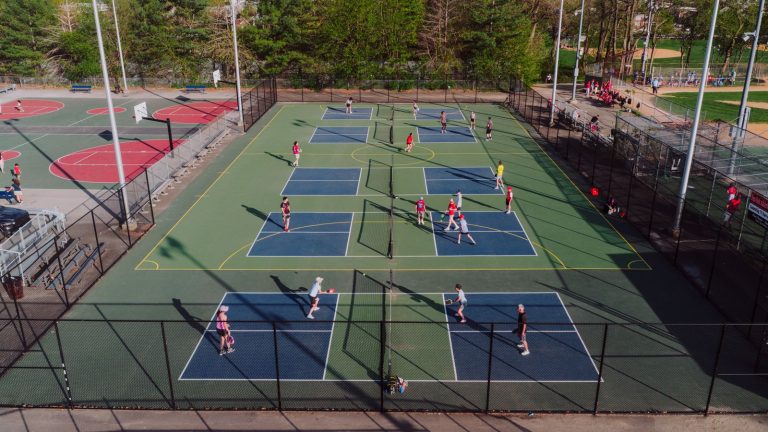
Watch two experienced doubles teams and you will see long stretches where all four players stand at the kitchen line, tapping the ball softly back and forth. Those soft shots are dinks, and every one is a small test: who will hit a ball too high first? The player who can dink patiently and accurately usually gets the first chance to attack.
What is a dink?
A dink is a soft shot hit from at or near the kitchen line that lands in your opponent’s kitchen, the 7-foot non-volley zone on their side of the net. A good dink stays low as it crosses the net and lands at their feet, so they have to hit up on the ball. A ball they must hit up is hard to attack.
You can dink a ball after it bounces, or out of the air if you are standing outside the kitchen. Just remember the kitchen rule: no volleys while you are touching the zone or its line. Our guide to the kitchen rule covers this in detail.
Why dinking matters
Pickleball rewards the team that controls the net. Once both teams are at the kitchen line, hard shots become risky, because a ball hit hard from below the net tends to either sail long or pop up for an easy put-away. Dinking lets you stay in the rally safely while you wait for an attackable ball.
It also levels the field: in a dink rally, patience and touch matter more than strength.
Grip and paddle position
Most players use a continental grip for dinks, the same “shake hands with the paddle” grip used for most shots in pickleball. It lets you hit forehand and backhand dinks without changing your grip.
Hold the paddle loosely. On a scale of 1 to 10, aim for a grip pressure of about 3 or 4. A tight grip makes the ball jump off the paddle, while a relaxed grip absorbs pace and gives you softer, more controlled shots.
The dink ready position
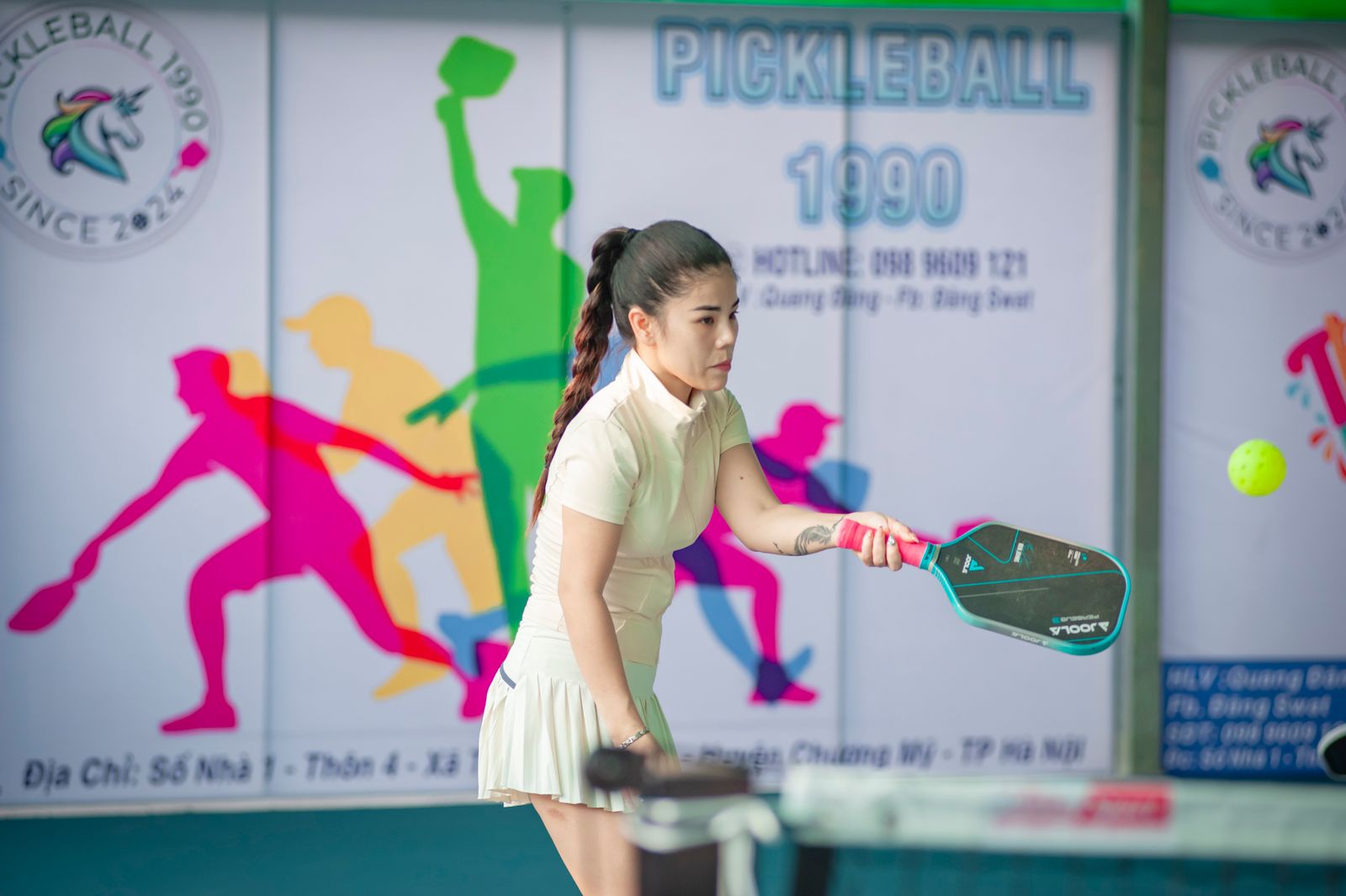
Good dinks start before you hit the ball. Set up like this:
-
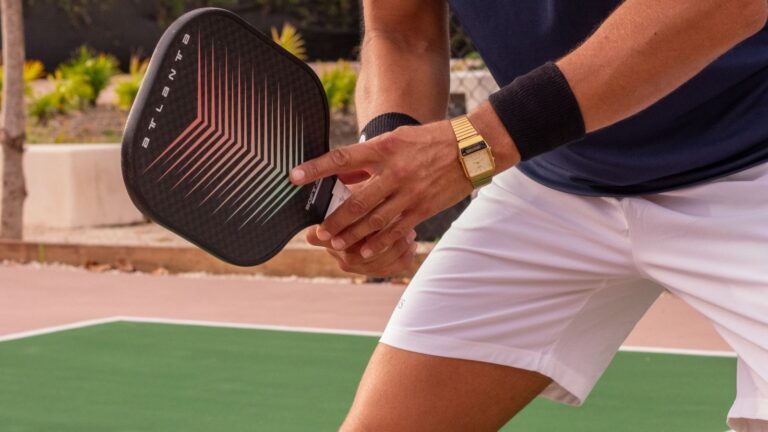
Stand a few inches behind the kitchen line, feet a little wider than your shoulders.
-
Bend your knees and sink your hips, as if starting to sit in a chair.
-
Keep your paddle in front of you, tip slightly down or level, around knee to waist height.
-
Keep your weight on the balls of your feet so you can step forward or sideways.
The key is to get low with your legs rather than bending at the waist. Low legs keep your eyes closer to the ball and make it easier to lift the ball gently.
How to hit a dink, step by step
-
Move your feet first. Step toward the ball so it ends up slightly in front of you and to your paddle side. Reaching with your arm leads to mishits.
-
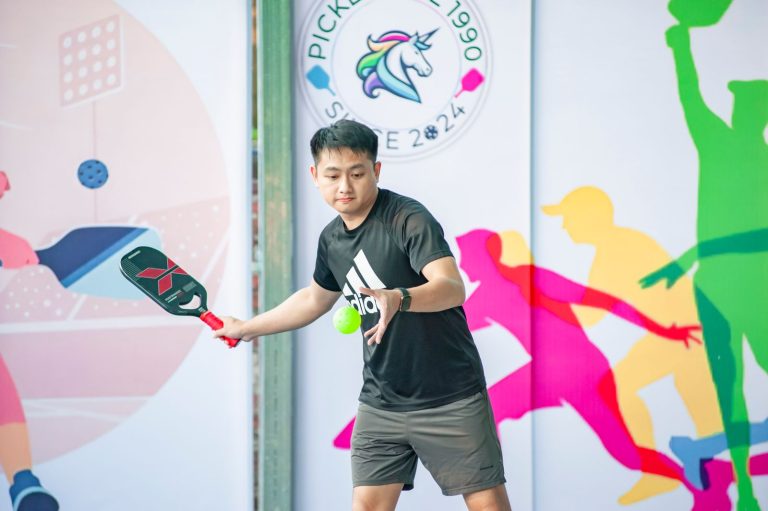
Keep the backswing tiny. The paddle should travel back only a few inches. The motion comes from your shoulder, not your wrist.
-
Open the paddle face slightly so it points a little upward. This gives the ball enough lift to clear the net.
-
Lift, don’t hit. Push the ball forward and slightly up with a smooth, gentle motion, as if you were tossing a ball underhand to a friend.
-
Follow through toward your target and stop. Then return to your ready position right away.
Aim for the ball to peak on your side of the net, then drop down into the kitchen. If the ball’s highest point is over your opponent’s side, it will usually land too deep or sit up for them.
Cross-court vs straight dinks
Cross-court dinks
A cross-court dink travels diagonally to the player across from you. It is the default dink for good reasons:
-
The ball passes over the lowest part of the net, which is in the middle.
-
The diagonal path is longer, so you have more room for error.
-
It gives you more time to recover before the next ball.
Straight dinks
A straight dink goes to the opponent directly in front of you. It covers less distance and crosses a higher part of the net, so it needs more precision. It is still useful when an opponent is leaning cross-court or when you want to move them toward the sideline.
A good habit for beginners: dink mostly cross-court, and use the occasional straight dink to change things up.
Where to aim your dinks
-
At your opponent’s feet. A ball that lands near their toes forces them to hit up.
-
To their backhand. Backhand dinks are often weaker for recreational players.
-
Safely inside the kitchen. A dink that lands right at the kitchen line can often be taken out of the air by an opponent standing behind it, so give yourself a margin of a foot or two.
Avoid trying to paint the lines. A dink that lands safely in the middle of the kitchen is better than one that goes out.
When to stop dinking and speed up
Dinking is not about waiting forever. It is about waiting for the right ball. Look to speed up, meaning hit a firm, fast shot, when:
-
Your opponent’s dink bounces above net height and you can hit down on it.
-
An opponent is off balance or out of position.
-
You can hit the ball from a high contact point, well in front of your body.
If the ball is below the net, keep dinking. Speeding up from a low ball is one of the most common ways to lose a rally, because you are hitting up and giving your opponents an easy volley.
Dinking drills
Cross-court dink rally
With a partner, stand diagonally across from each other at the kitchen line. Dink only to the opponent’s half of the kitchen. Count how many dinks in a row you can make. Start with a target of 10, then 20.
Straight dink rally
Repeat the drill straight ahead. Because the target is smaller, this sharpens your control.
Target dinks
Place a towel or small cone in the kitchen. Each player gets a point for landing a dink on or next to the target. Play to 11.
Dink and reset
One partner occasionally hits a slightly higher dink. The other decides: speed up if it is above the net, dink again if it is not. This builds the judgment that matters most in real games.
FAQ
Should I dink to the forehand or backhand?
Most recreational players are weaker on the backhand, so dinking there is usually a good default. Still, watch your opponent. Some players have a strong backhand dink and struggle more on their forehand.
Can you dink in singles?
You can, but dinking is less common in singles because one player has to cover the whole court. In singles, players usually rely more on deep shots and passing shots.
Why do my dinks keep going into the net?
You are probably swinging down or keeping the paddle face too closed. Bend your knees more, open the face slightly and lift the ball gently.
Quick recap
-
A dink is a soft shot that lands in your opponent’s kitchen and forces them to hit up.
-
Use a relaxed continental grip and get low with your legs.
-
Keep the stroke small and smooth, driven from the shoulder.
-
Dink mostly cross-court and aim at your opponent’s feet.
-
Speed up only when the ball is above net height.