The Kitchen Rule in Pickleball, Explained Simply
Ask any group of new players which rule confuses them most and the answer is usually the kitchen. The good news is that the rule is short. Once you know exactly what is and is not allowed, you will stop giving away easy points.
What is the kitchen?
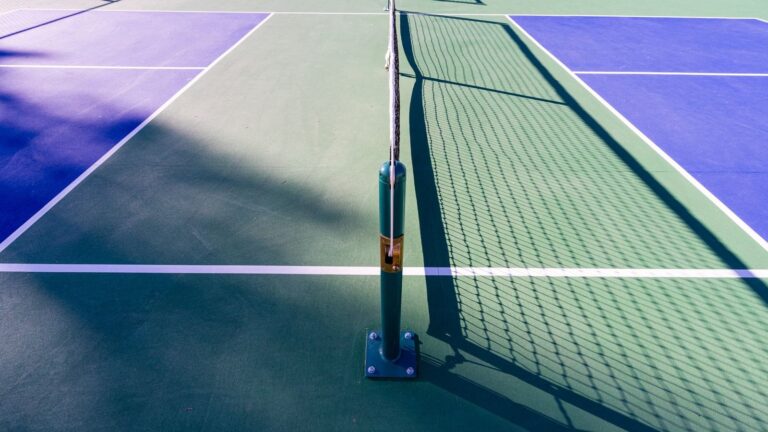
“The kitchen” is the nickname for the non-volley zone (NVZ): the area that extends 7 feet from the net on both sides of the court and runs the full width of the court. The kitchen line, the line that marks the back of this zone, is part of the kitchen. So are the short pieces of sideline that border it.
The rule in one sentence
You may not volley the ball while any part of your body, or anything you are wearing or holding, is touching the kitchen, including the kitchen line.
A volley is any shot you hit out of the air before it bounces. Shots that bounce first are not volleys, so the kitchen rule does not apply to them. It also only cares about the ground: your paddle and arms are free to reach over the kitchen in the air.
What you are allowed to do
-
Stand in the kitchen when the ball is not coming to you. There is no rule against simply being there.
-
Step into the kitchen to hit a ball that has bounced. This is how dinks, the soft shots that land in the kitchen, are usually played.
-
Stay in the kitchen after a bounced shot, as long as you get out before you try to volley.
-
Reach over the line with your paddle to volley a ball, as long as your feet stay behind it and you do not fall forward.
What counts as a kitchen fault
-
Volleying while one or both feet are in the kitchen or on the kitchen line.
-
Volleying from outside the zone, then letting your momentum carry you into it, even after the ball is dead.
-
Volleying while your paddle, hat or anything you are wearing or carrying touches the kitchen as part of the shot.
-
Volleying while you are still in the act of stepping out of the kitchen. You must re-establish both feet on the ground outside the zone first.
-
Jumping from inside the kitchen and volleying while you are in the air. Your feet have not landed outside yet, so it is still a fault.
Why the momentum rule catches so many players
Imagine you are right at the line and hit a winning volley. Your weight is moving forward, you take a small step to keep your balance, and your toe lands on the kitchen line. Even though your shot already won the rally, it is a fault and you lose the point.
Momentum also includes contact with your partner. If you volley, then grab your partner to stop yourself, and your partner is standing in the kitchen, that counts as you touching the kitchen.
How to stay out of trouble, step by step
-
Set up a few inches behind the line. Toes just behind the kitchen line give you room to lean forward without stepping on it.
-
Get into a balanced ready position. Knees bent, weight on the balls of your feet, paddle up in front of you.
-
Decide early: volley or let it bounce. If a ball is going to land at your feet, let it bounce and play it as a dink. If it is chest high, volley it from where you stand.
-
Finish every volley still. After contact, hold your position for a beat before moving. If you have to lunge, step to the side, not forward.
-
Reset after every dink. If you stepped into the kitchen to play a bounced ball, step back with both feet before the next shot comes.
Common situations
The ball floats up while you are inside the kitchen after a dink. You cannot volley it. Either back out with both feet first, or let it bounce and play it from where you are.
A fast ball comes at your body while your toes are on the line. Volleying it is a fault even if you hit a great shot. Train yourself to stand behind the line so this choice never comes up.
Your hat falls into the kitchen when you are not hitting the ball. Play continues. It is only a fault if the item touches the kitchen as part of your volley.
Can you jump over the kitchen?
Advanced players sometimes jump from outside the court over the corner of the kitchen to volley the ball. This shot, called an “Erne”, is legal as long as the player does not touch the kitchen before, during or after the volley. It is fun to watch, but beginners should master the basics first.
Why does the kitchen exist?
Without the kitchen, the best strategy would be to stand at the net and smash every ball. The non-volley zone keeps players back, rewards control and creates the soft dinking game that makes pickleball unique. Our guide to dinking covers that soft game in detail.
Kitchen etiquette
In recreational games, players call their own kitchen faults. If you notice your foot on the line during a volley, call it on yourself. Your opponents will respect you for it.
FAQ
Can I call a kitchen fault on my opponent?
Yes. In games without a referee, kitchen faults are one of the few faults you may call on the other team, and you must do it before the next serve. If the two teams disagree about the call, the rally is replayed.
Is it a fault if my paddle crosses over the kitchen line?
No. The kitchen is the ground, not the air above it. Your paddle can be over the zone when you volley; only contact with the surface, including the line, counts.
Does the kitchen rule apply to the serve return?
The receiver must let the serve bounce anyway, so the return is never a volley. The kitchen rule matters from the third shot on, once volleys are allowed.
How long do I have to stay out after a volley?
There is no time limit. The fault is about your momentum from that volley. Once you have clearly regained your balance outside the zone, you may walk into the kitchen.
Quick recap
-
The kitchen is the 7-foot non-volley zone on each side of the net, and the line is part of it.
-
No volleys while touching the kitchen, and that includes momentum after the shot.
-
You can enter the kitchen at any time to play a ball that has bounced.
-
Get both feet out before your next volley, and stand just behind the line.
Want to see how the kitchen fits into the rest of the game? Read our complete guide to pickleball rules for beginners.