Pantry Organization: 10 Easy Ideas That Actually Work
A well-organized pantry saves time, money and food. You can see what you have, you stop buying duplicates and less food goes to waste. You do not need a big budget or a walk-in pantry: these ten ideas work for cabinets and small shelves too.
Plan on about an hour for the first full reset of an average pantry. After that, keeping it in order takes a few minutes a week.
1. Empty everything and start clean
Take every item out and put it on the counter or kitchen table. Vacuum crumbs from the corners, then wipe the shelves with warm, soapy water and let them dry completely before putting anything back.
While everything is out, check expiration and “best by” dates. Throw away anything stale, expired or showing signs of pests. Discard cans that are bulging, leaking or deeply dented, especially along the seams. Set aside unopened, in-date food you will not use to donate to a local food bank.
Check for pests. Small moths, webbing in grain products or tiny holes in packaging are signs of pantry pests. Throw out affected food in a sealed bag, take it outside, vacuum the shelves well and check nearby packages too.
2. Group similar items into zones
Create zones that match how you cook and shop, for example:
-
Breakfast: cereal, oats, spreads
-
Baking: flour, sugar, baking powder
-
Pasta, rice and grains
-
Canned goods
-
Snacks
-
Sauces, oils and condiments
Zones make it obvious where things belong and where to look. A practical example: if you make school lunches, put bread, peanut butter, snack packs and lunch bags together on one shelf, so the whole job happens in one spot.
3. Put everyday items at eye level
Keep the things you use most often between your shoulders and your hips. Store heavy items, such as bulk rice or large bottles, low. Put rarely used items, such as holiday baking supplies, on the top shelf. If you have children, give them a low shelf with their own snacks, so they can help themselves without pulling everything out.
4. Use clear containers for dry goods
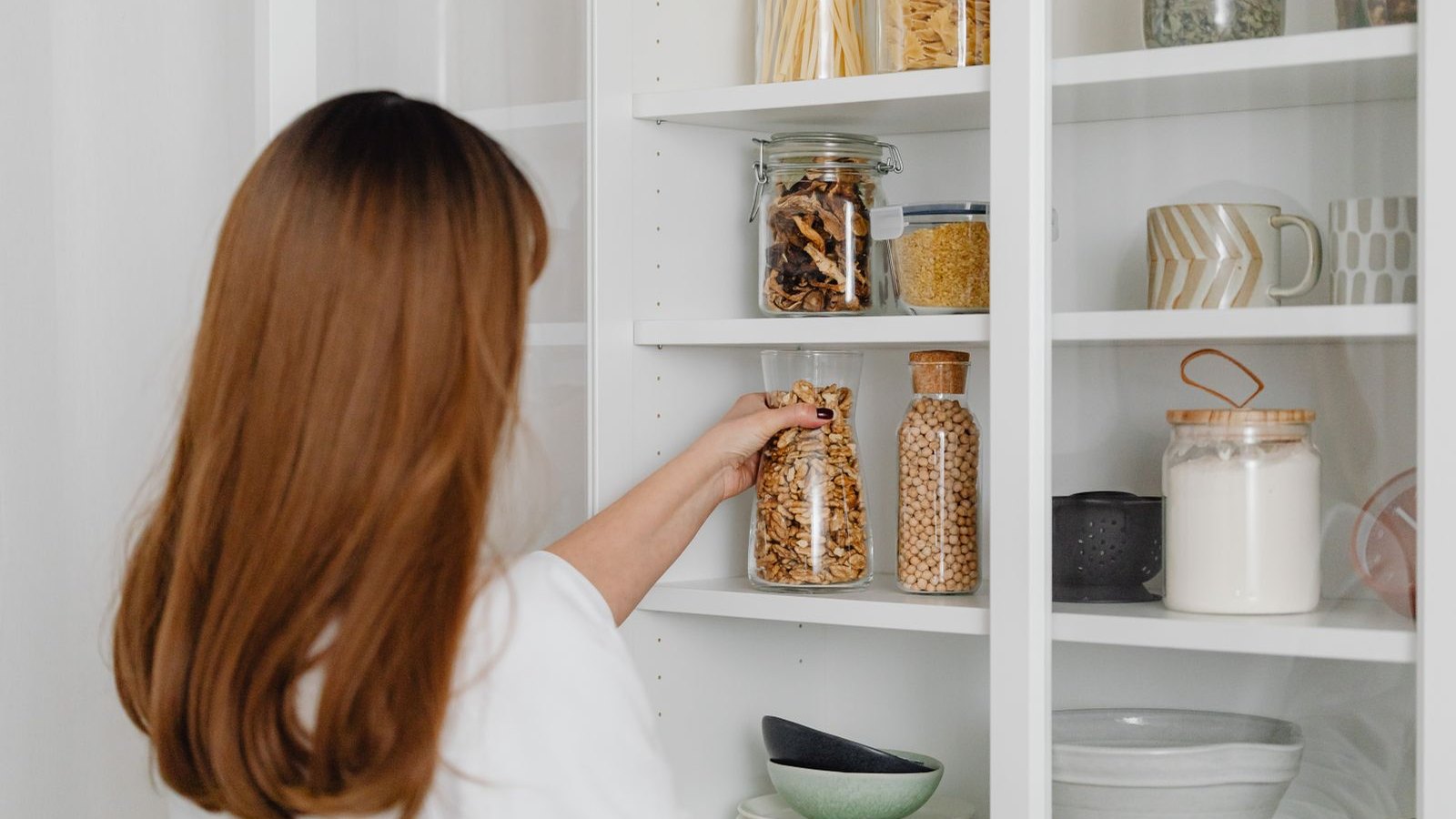
Clear, airtight containers for flour, rice, pasta and cereal keep food fresh, help keep pests out and let you see at a glance when you are running low. Choose square or rectangular containers; they use shelf space better than round ones.
Measure your shelf depth and height before buying, so containers fit without wasted space. You do not need to decant everything. Start with the items you buy in bags that are hard to close, like flour, sugar and rice. Wash and dry containers completely before refilling, and avoid adding new food on top of old.
Whole wheat flour, nuts and seeds contain more oil than white flour and can go rancid faster. If you use them slowly, store them in the refrigerator or freezer.
5. Label everything
Label containers with the contents, and for long-lasting items, the date you opened or refilled them. Labels keep the system working when other people put the groceries away. Cut the cooking instructions off the original package and tape them to the back of the container, or write them on the label.
6. First in, first out
When you unpack groceries, move older items to the front and put new ones at the back. It is one of the simplest ways to reduce food waste. For canned goods, USDA guidance suggests using high-acid foods, such as tomatoes and fruit, within about 12 to 18 months and low-acid foods, such as vegetables and beans, within about 2 to 5 years for best quality.
7. Add risers for cans and jars
Tiered shelf risers let you see every can instead of only the front row. A simple wire shelf can also double your space for plates or short items.
8. Use a turntable for oils and sauces
A lazy Susan in a corner or on a deep shelf keeps bottles from getting lost at the back. Spin it, grab what you need and you are done.
9. Corral loose items in baskets
Snack packs, seasoning packets and small bags slide around and create mess. Put them in open baskets or bins, labeled by category, and you can pull a whole category out at once. On deep shelves, bins work like drawers: pull the bin out instead of reaching blindly to the back.
10. Use the back of the door
An over-the-door rack adds a surprising amount of storage for spices, foil, plastic wrap and small jars, and it works in cabinets as well as pantries. Measure the space between the door and the shelves first, so the door still closes.
Common problems and fixes
-
Things keep getting lost at the back. The shelves are too deep for how you use them. Add bins or turntables so the back is easy to reach.
-
The system falls apart after a few weeks. It is probably too complicated. Use broader zones, fewer containers and bigger labels.
-
You keep buying duplicates. Check the pantry before you shop, and keep one “open” item of each kind at the front.
-
There is not enough space. Store backstock, such as extra cans and paper goods, in a separate bin or closet and refill the pantry from there.
Keep it organized
-
Do a five-minute tidy when you put away the weekly groceries.
-
Keep a running shopping list on the pantry door or on your phone.
-
Every few months, repeat step one: check dates and wipe the shelves.
If your refrigerator needs the same treatment, see our guide to refrigerator organization.
Food safety tip
Store food in cool, dry places away from the stove, dishwasher and direct sunlight, because heat and moisture shorten shelf life. Keep containers tightly closed to keep pests out, and follow the storage instructions on the packaging. Some products need to be refrigerated after opening, so check the label.
FAQ
How often should I clean out my pantry?
A quick tidy each week and a full clean-out every three to four months works well for most households.
Do I need to put everything in matching containers?
No. Containers help most with bags that are hard to close. Boxes and cans can stay in their original packaging, grouped in zones or bins.
Is food still safe after the “best by” date?
These dates usually refer to quality, not safety, for most shelf-stable foods. Check the food for signs of spoilage, and discard damaged cans or anything that smells or looks off.
What is the best way to organize a pantry with no shelves?
Use freestanding shelving, stackable bins and an over-the-door rack. The same zone and eye-level rules still apply.
Quick recap
-
Empty, clean and check dates and packaging first.
-
Organize by zones, with everyday items at eye level.
-
Clear containers, labels and “first in, first out” keep it working.
-
Risers, turntables, baskets and door racks make the most of every inch.
-
A five-minute weekly tidy keeps the system from falling apart.