How to Organize a Refrigerator So Food Lasts Longer
A well-organized fridge is not just nicer to open. It keeps food safe, makes it last longer and cuts down on the forgotten containers that end up in the trash. The trick is to work with how a refrigerator actually behaves: some areas are colder than others, and some drawers are designed for specific foods.
Start with the right temperature
Food safety comes first. The USDA and FDA recommend keeping your refrigerator at 40°F (4°C) or below and your freezer at 0°F (-18°C). Bacteria multiply quickly above 40°F.
The dial on many fridges shows numbers rather than degrees, so buy an inexpensive appliance thermometer. Place it in a glass of water on a middle shelf, wait several hours and read it. Adjust the setting until it stays at or just below 40°F. Many people aim for about 37°F, which keeps food safe without freezing lettuce.
Understand your fridge’s zones
Temperatures vary inside a refrigerator. In most models:
-
The door is the warmest part because it is exposed to room air every time it opens.
-
Upper shelves are fairly consistent but slightly warmer.
-
Lower shelves and the back are usually the coldest.
-
Crisper drawers hold humidity better than the open shelves.
Some fridges cool differently, especially models with the freezer on the bottom, so check your manual to see where the coldest area is.
What goes where
Upper shelves: ready-to-eat foods
-
Leftovers in sealed containers
-
Drinks
-
Deli items, hummus, dips
-
Herbs standing in a jar of water (except basil, which is happier on the counter)
Lower shelves: raw meat, poultry and seafood
-
Store raw meat on the bottom shelf, in its packaging and inside a rimmed tray or container.
-
Keeping it low means any drips cannot fall onto foods that will not be cooked.
-
Milk and dairy also do well on a lower or middle shelf, where it is colder and steadier than the door.
Middle shelves: dairy and eggs
-
Yogurt, cheese and sour cream
-
Eggs in their original carton. The carton protects them and shows the date. The door is too warm for eggs, even though many fridges have an egg tray there.
The door: condiments and sturdy items
-
Ketchup, mustard, salad dressing, jam, pickles
-
Butter (in a covered compartment)
-
Juice and bottled water
-
Avoid storing milk or eggs here.
Set the crisper drawers correctly
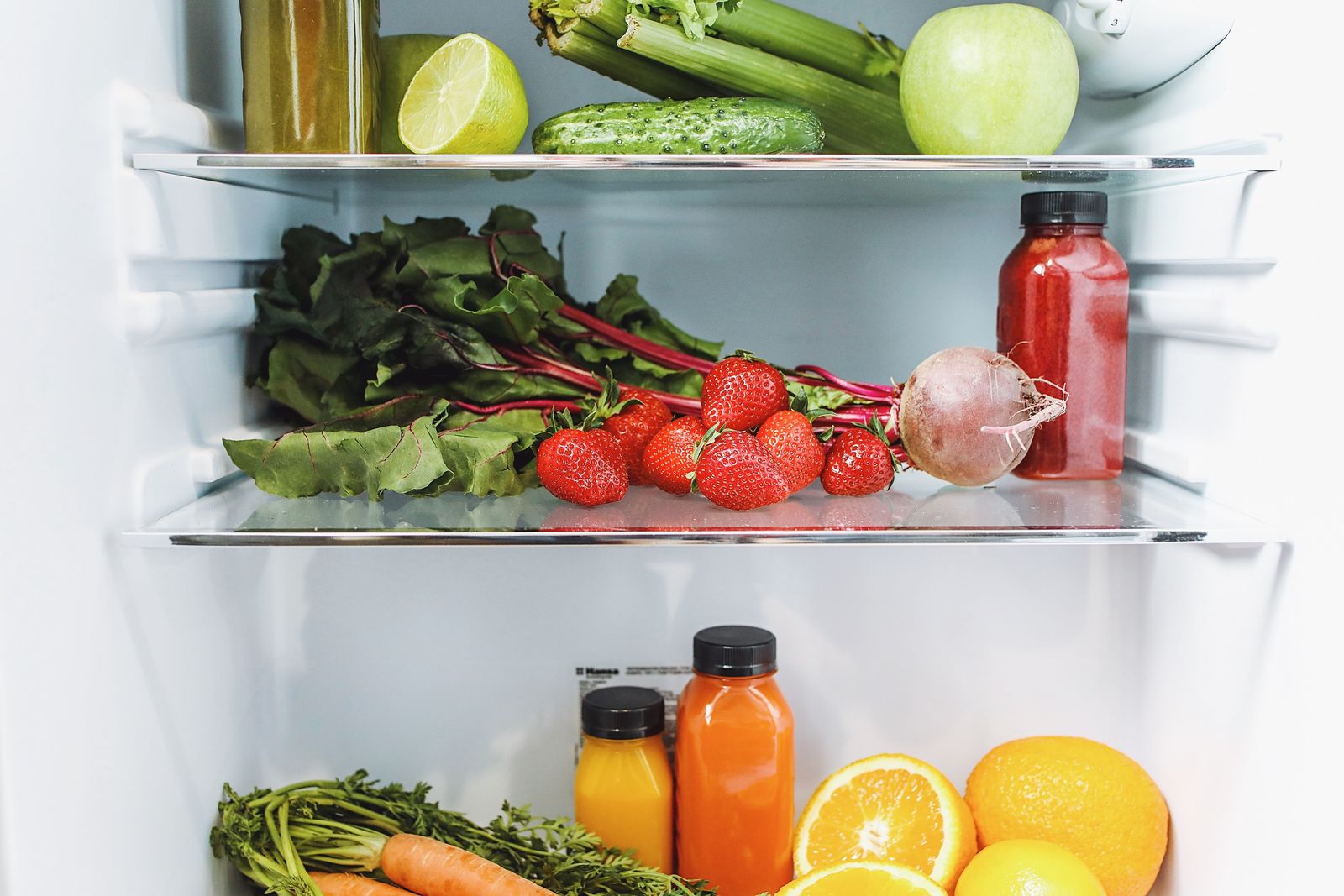
Many fridges have humidity controls on the crisper drawers, usually a slider that opens or closes a small vent.
High humidity (vent closed): vegetables that wilt
-
Leafy greens, lettuce, spinach
-
Broccoli, carrots, cucumbers, peppers
-
Fresh herbs
Low humidity (vent open): fruits that ripen and rot
-
Apples, pears, stone fruit
-
Grapes and berries
-
Ripe avocados
Many fruits, apples in particular, give off ethylene gas, which speeds ripening and can make nearby vegetables spoil faster. Keeping fruits and vegetables in separate drawers helps both last longer. If your drawers have no controls, one drawer for fruit and one for vegetables still makes a difference.
A paper towel at the bottom of the vegetable drawer absorbs excess moisture. Wash produce just before eating, not before storing, since extra moisture encourages mold.
Use bins and labels
Clear, shallow bins turn a cluttered fridge into a set of simple zones.
-
A snack bin for cheese sticks, yogurt cups and cut fruit makes it easy for everyone, kids included, to grab something.
-
A “use first” bin at eye level holds anything that needs to be eaten soon.
-
A condiment bin gathers small jars that otherwise get lost at the back.
-
A turntable in a deep corner keeps sauces and jars visible.
-
Labels on bins and on leftovers stop the guessing. Write the contents and the date on a strip of masking tape.
Choose bins that leave space around them. Cold air needs to circulate, so do not pack the fridge so tightly that air vents are blocked.
First in, first out
When you unpack groceries, move older items to the front and put new ones behind them. It is the same rule grocery stores use, and it works at home.
For leftovers, the USDA’s general guideline is to eat them within 3 to 4 days or freeze them. A dated label makes that easy to follow. When in doubt, throw it out.
The 10-minute weekly reset
Pick a day, ideally right before you shop, for a quick reset.
-
Check dates and leftovers. Toss anything spoiled or past its safe window.
-
Move items that need using into the “use first” bin.
-
Wipe spills on shelves and in drawers with warm, soapy water and dry them.
-
Make a list of what is running low while you can see everything.
-
Check the thermometer to confirm it still reads 40°F or below.
Every few months, give the fridge a deeper clean. Unplug it if the manual recommends it, take out the shelves and drawers, wash them in warm soapy water, and dry everything before putting food back. Use mild cleaners only, and never mix cleaning products, especially bleach with ammonia or vinegar. An open box of baking soda on a shelf helps absorb odors between cleans.
FAQ
What is the coldest part of the fridge?
Usually the back of the lower shelves. The door is the warmest. Check your manual, since some designs differ.
Should raw meat go in the meat drawer or on the bottom shelf?
Either works if the meat drawer is at the bottom. What matters is that raw meat sits below ready-to-eat food and is in a container that catches drips.
Why do my vegetables go bad so fast?
The usual culprits are the wrong humidity setting, storing them next to ethylene-producing fruit, washing them before storing or a fridge set too warm or too cold.
Is it safe to put hot leftovers in the fridge?
Yes. Refrigerate leftovers within 2 hours of cooking (1 hour if it is above 90°F outside). Divide large batches into shallow containers so they cool quickly.
Quick recap
-
Keep the fridge at 40°F (4°C) or below and the freezer at 0°F (-18°C), and check with a thermometer.
-
Ready-to-eat food goes up top, raw meat goes on the bottom in a tray, and condiments go in the door.
-
Set crisper drawers to high humidity for vegetables and low humidity for fruit.
-
Use clear bins, a “use first” bin and dated labels.
-
Practice first in, first out and eat leftovers within 3 to 4 days.
-
Do a 10-minute reset every week before shopping.