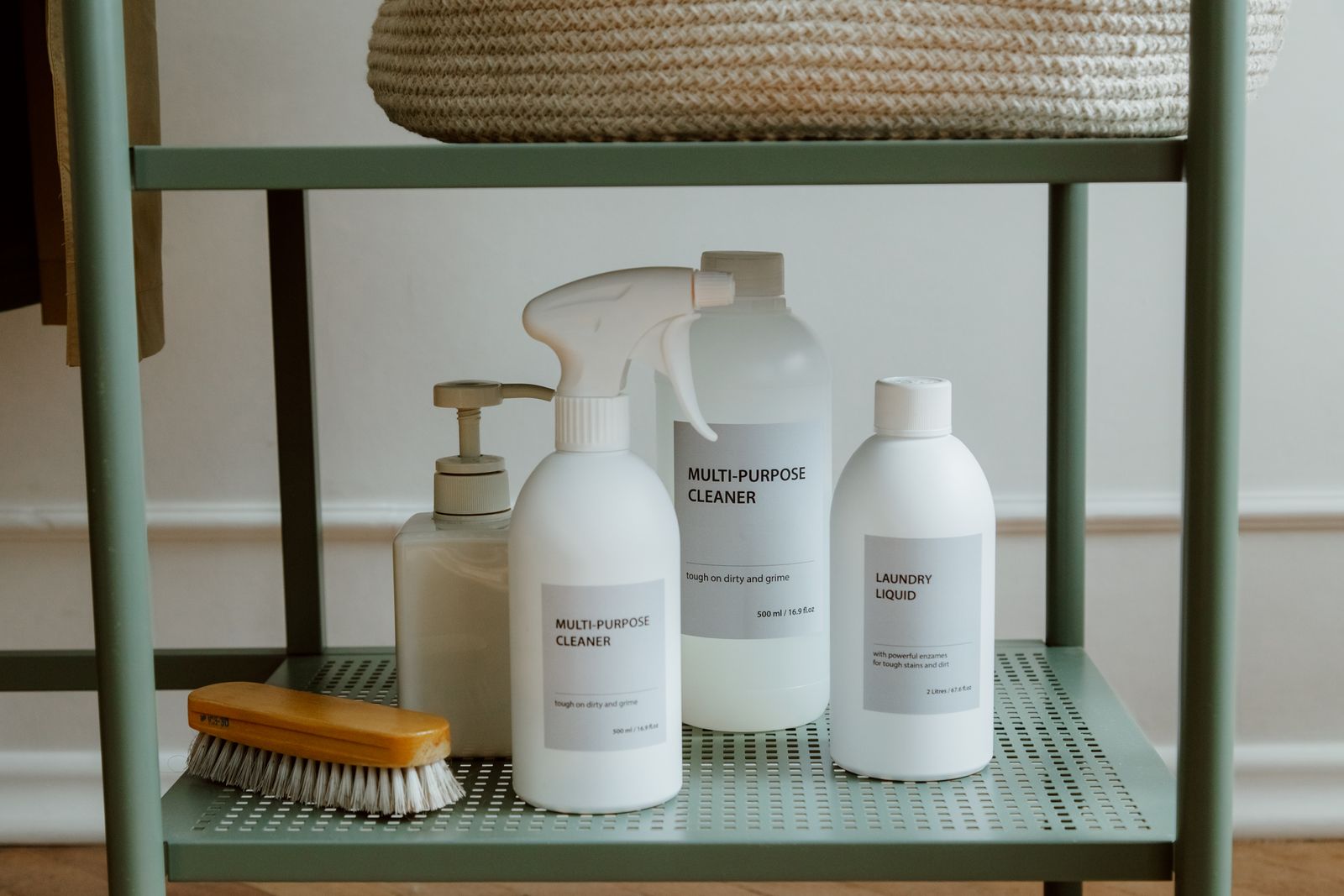
Under-Sink Organization Ideas for the Kitchen and Bathroom
The cabinet under the sink is one of the most useful storage spots in the house, and one of the hardest to keep tidy. Pipes run through the middle, the space is deep and dark, and it tends to collect half-empty bottles and stray sponges. With a little planning, it can hold everything you need for cleaning, neatly and safely.
Step 1: Empty it and check for problems
Take everything out. Before you buy a single organizer, look closely at the empty cabinet:
-
Check for leaks. Feel the pipes and the cabinet floor for damp spots, and look for water stains, warping or a musty smell. Fix any leak before you organize.
-
Find the shutoff valves. You need to reach them quickly in an emergency, so plan to keep that area clear.
-
Clean the cabinet. Wipe the floor and walls and let it dry fully with the doors open.
-
Sort what you removed. Throw out empty or dried-up products, combine duplicates and move anything that does not belong there (more on that below).
Step 2: Measure around the pipes
Under-sink cabinets are rarely a simple box. Measure:
-
The interior width, depth and height
-
The width of the door opening, which is often narrower than the inside
-
Where the drain pipe and P-trap sit, and how much space is on each side
-
Any garbage disposal, water filter or hot water dispenser
Sketch the space with the measurements on paper or in your phone. Bring it when you shop. Many organizers fail because they are a half inch too wide for the door opening or collide with the drain.
Step 3: Use pull-out bins and drawers
Deep cabinets bury items at the back. Sliding organizers bring everything forward.
-
Pull-out drawers or sliding baskets on either side of the plumbing let you see and reach everything without kneeling and digging.
-
Two-tier organizers make use of vertical space. Several designs are made specifically to fit around a drain pipe, with adjustable or removable shelves.
-
Simple open bins with handles are the budget option. Group items by task and pull the whole bin out when you need it.
Choose plastic or coated metal over cardboard or untreated wood. They wipe clean and will not be ruined by a drip.
Step 4: Add a tension rod
A tension rod is one of the cheapest organizing tools you can buy. Fit one horizontally near the top of the cabinet, clear of the pipes, and hang spray bottles from it by their triggers. That clears the floor of the cabinet for bins and makes the bottles easy to grab.
In a bathroom vanity, a tension rod can also hold a small caddy or a few cloths.
Step 5: Use the inside of the doors
The back of the cabinet doors is free storage space.
-
Over-the-door or adhesive racks hold sponges, brushes, rubber gloves or rolls of trash bags.
-
Small hooks are handy for hanging dish brushes or a dustpan.
-
An adhesive caddy can hold a box of trash bags so you can pull one at a time.
Before you install anything, close the door slowly to make sure the rack clears the pipes and the shelves inside.
Step 6: Put down a leak tray or liner
A waterproof cabinet liner or a drip tray with raised edges protects the cabinet floor from slow leaks and spilled cleaners. Some trays are made to fit the cabinet exactly, and a few have a built-in leak alert. A small battery-powered water leak sensor is another inexpensive way to get an early warning.
Liners also make cleaning easy. Lift them out, wipe them and put them back.
Store cleaning chemicals safely
Under the sink is a natural place for cleaning products, which is why it is also a common source of accidental poisonings in young children. Take a few simple precautions.
-
Install a childproof latch on any under-sink cabinet that holds cleaners, even if you do not have kids at home but have visitors who do. Use it every time.
-
Better yet, move the strongest products up high. Drain cleaners, oven cleaners and products with bleach are safest in a high, locked cabinet.
-
Keep products in their original containers. Never pour cleaners into food or drink bottles. The label carries the instructions and first-aid information.
-
Keep products that react apart. Store bleach away from ammonia-based cleaners and acids like vinegar, and never mix them. They can release toxic gases.
-
Close caps tightly and put dripping bottles in a small tray.
-
Laundry and dishwasher pods look like candy to small children. Keep them in their closed container, out of reach.
-
Save the Poison Help line, 1-800-222-1222 in the US, in your phone.
What not to store under the sink
Some things should live elsewhere because of moisture, heat or safety.
-
Food and pet food. Pests are drawn to the moisture, and chemicals are nearby.
-
Paper goods in open packaging, such as paper towels and toilet paper, unless they are in a sealed bin. A leak ruins them.
-
Flammable products like aerosol cans, lighter fluid or paint thinner, especially near a garbage disposal or hot water dispenser.
-
Medications. Humidity can affect them, and kids can reach them.
-
Anything you rarely use. This prime spot is for daily and weekly essentials.
Ideas for the kitchen vs. the bathroom
Kitchen: Keep dish soap refills, dishwasher detergent, sponges, trash bags and an all-purpose cleaner within reach. A pull-out bin for trash bags and a door rack for brushes work well here.
Bathroom: Use a two-tier organizer for extra toilet paper (in a closed bin), spare toiletries and bathroom cleaner. Clear stacking drawers keep hair tools and small items from getting lost. Keep cords well away from water lines.
FAQ
How do I organize under a sink with a garbage disposal?
Use narrow organizers on either side of the disposal, and leave the space around the disposal and its electrical connection clear. A tension rod above can still hold spray bottles if it fits.
Is it safe to keep cleaning products under the sink?
It can be, with a childproof latch, products kept in original containers and strong chemicals stored apart. Homes with young children are safer moving harsh cleaners to a high, locked cabinet.
What is the best way to protect the cabinet floor?
A waterproof liner or a drip tray with raised edges. Pair it with a leak sensor if you want an early warning.
Quick recap
-
Empty the cabinet, fix any leaks and keep the shutoff valves clear.
-
Measure the space, the door opening and the pipes before buying organizers.
-
Use pull-out bins, tension rods and door racks to make the most of the space.
-
Add a waterproof liner or leak tray.
-
Lock up cleaning chemicals, keep them in original containers and never mix them.
-
Store food, medications and flammables somewhere else.